
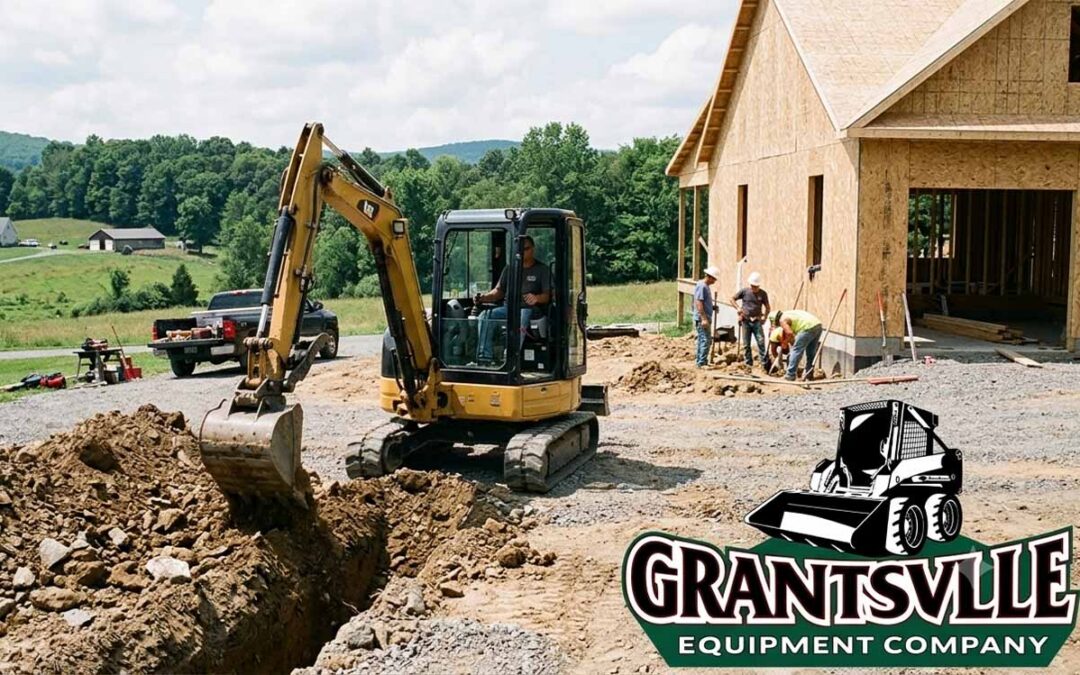
Renting or purchasing a compact excavator (mini excavator) transforms residential earthmoving tasks—from digging septic fields and clearing stumps to grading driveways and digging retaining wall foundations. However, choosing the wrong size machine can lead to property damage or insufficient digging power. This guide details how to match excavator specs to your exact residential project requirements.
Understanding Mini Excavator Operating Weights
Compact excavators are classified by operational weight, which dictates dig depth, lifting capacity, and overall footprint:
- 1 to 2-Ton Class (Micro Excavators): Designed to fit through standard yard gates (36 inches wide) and work in tight backyards. Perfect for small trenching jobs, tree planting, fence posts, and light landscaping.
- 3 to 4-Ton Class (Standard Residential Workhorse): The standard choice for home excavation. Offers dig depths of 9 to 11 feet, sufficient power to break through rocky soil, and the stability to lift heavy stone or culvert pipes without tearing up established lawn areas.
- 5 to 8-Ton Class (Heavy Residential & Site Prep): Built for large foundation digs, land clearing, large stump extraction, and major land grading. Requires medium-duty or heavy transport equipment for trailering.
Key Machine Features to Consider
- Tail Swing Configuration: Standard tail swing provides maximum stability and higher lifting capacities. Zero Tail Swing (ZTS) models allow the house (upper structure) to rotate entirely within the track width, preventing accidental contact with house siding, fences, or trees.
- Track Options: Rubber tracks are essential for residential projects to protect asphalt driveways, concrete walkways, and established turf. Steel tracks should only be used on raw soil or steep, unpaved hillside clearing.
- Hydraulic Attachments: Ensure the machine features auxiliary hydraulics to support specialized attachments like hydraulic breakers (for breaking up rock/concrete), augers (for digging post holes), or trenching buckets.
Job Site Preparation and Operational Safety
- Call Before You Dig: Always contact 811 to mark underground power, water, and gas lines prior to breaking ground.
- Assess Slope & Ground Stability: High-mountain residential properties often involve sloped terrain. Position the excavator blade downhill when digging to maintain low center-of-gravity stability and avoid swinging loaded buckets uphill on steep angles.
Selecting the right mini excavator comes down to balancing compact maneuverability with the digging power your project demands. By assessing site access, ground conditions, and attachment needs upfront, you can tackle residential landscaping, foundation work, or utility installs efficiently while protecting the surrounding property. If you’re ready to get started on your next residential project, the experts at Grantsville Equipment can match you with the ideal compact excavator size and attachments for the job. Contact us today to check availability, request a transport quote, or reserve your rental machine.
📞 Call Us: (301) 689-1600
📧 Visit Us: 14344 National Pike, Frostburg, MD 21532
🌐 Contact Us: Get In Touch